In today’s fast-paced digital world, understanding laptop hardware is crucial for anyone looking to buy or upgrade their device. With a myriad of components working together, the hardware inside a laptop determines its performance, efficiency, and overall user experience. From processors and RAM to storage solutions and graphics cards, each piece plays a vital role in how well a laptop operates.
Navigating the complexities of laptop hardware can be daunting. However, knowing what to look for can help users make informed decisions tailored to their needs. Whether it’s for gaming, professional work, or casual browsing, the right hardware can significantly enhance productivity and enjoyment. This article will delve into the key components of laptop hardware, helping readers understand how to choose the perfect machine for their lifestyle.
Overview of Laptop Hardware
Laptop hardware consists of several critical components that determine performance and efficiency. Understanding these components allows users to select devices tailored to their needs.
Processor
Processors, or CPUs, execute instructions and perform calculations. Various brands, like Intel and AMD, offer processors with different performance levels. Most laptops contain dual-core or quad-core processors, with higher core counts supporting multitasking better.
RAM
Random Access Memory, or RAM, affects speed and responsiveness. Most modern laptops include 4GB to 16GB of RAM. Higher RAM capacity enhances the laptop’s ability to run multiple applications simultaneously without lag.
Storage
Storage types include Solid State Drives (SSDs) and Hard Disk Drives (HDDs). SSDs provide quicker data access and faster boot times. HDDs offer larger storage capacities at lower costs. Users should consider their storage needs based on data size and application requirements.
Graphics Card
Graphics Processing Units (GPUs) are crucial for rendering images and videos. Integrated graphics are sufficient for casual tasks, while dedicated graphics cards handle gaming and graphic-intensive applications. Manufacturers like NVIDIA and AMD lead in providing powerful GPUs.
Motherboard
The motherboard connects all hardware components and allows communication. It dictates compatibility and upgradability for other parts. Brands and chipsets vary according to users’ needs for features and expansion options.
Battery
Battery life varies based on hardware usage and specifications. Most laptops offer between 5 to 12 hours on a single charge. Assessing battery performance is essential for users requiring portability.
Display
Laptop displays come in various resolutions, from HD to 4K. Screen sizes range from 11 inches to 17 inches. Higher resolution and larger screens enhance viewing experiences for multimedia consumption and professional tasks.
Ports and Connectivity
Laptops include multiple ports, including USB-C, HDMI, and audio jacks. They also feature connectivity options like Wi-Fi and Bluetooth. The availability of these ports supports the integration of various peripherals and accessories.
Cooling System
Effective cooling systems prevent overheating and maintain optimal performance. Laptops employ fans and heat sinks to dissipate heat. Consideration of the cooling design is crucial for those who run resource-intensive applications.
Understanding these hardware components and their roles aids users in making informed decisions suitable to their usage scenarios. Each aspect directly influences the laptop’s capability and overall user experience.
Key Components of Laptop Hardware
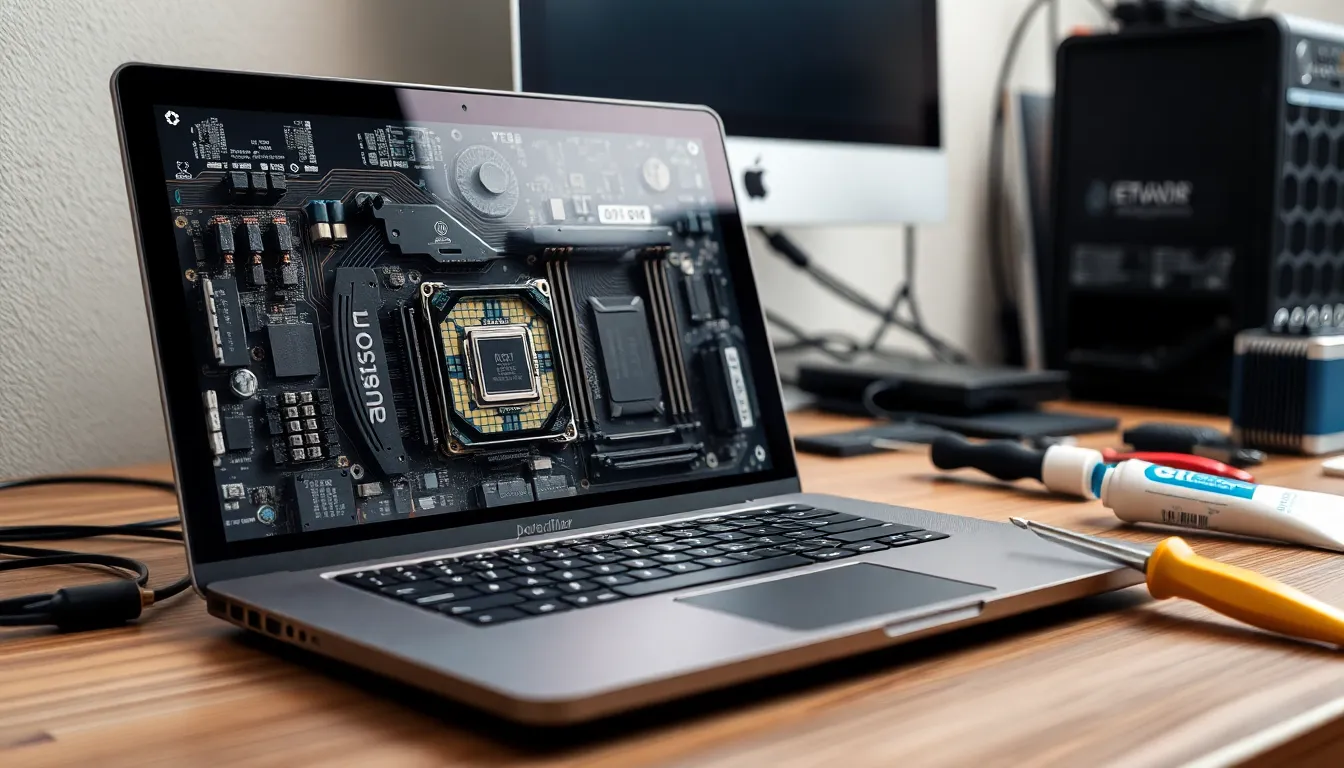
Understanding the key components of laptop hardware is essential for selecting the right device. Each component contributes significantly to performance and user experience.
Central Processing Unit (CPU)
The Central Processing Unit (CPU) executes instructions and manages tasks within the laptop. It serves as the brain of the computer, with common options including dual-core and quad-core processors. Clock speed, measured in gigahertz (GHz), determines performance, with higher numbers indicating faster speeds. Intel and AMD dominate the market, offering various models suitable for gaming, office tasks, or graphic design.
Graphics Processing Unit (GPU)
The Graphics Processing Unit (GPU) handles image rendering and video playback. Integrated graphics are sufficient for casual use and routine tasks, while dedicated GPUs are necessary for gaming and high-performance applications. GPUs possess their own memory, known as VRAM, which aids in processing complex graphics. NVIDIA and AMD supply most dedicated graphics cards, catering to diverse performance needs.
Random Access Memory (RAM)
Random Access Memory (RAM) impacts system speed and responsiveness. Modern laptops typically offer 4GB to 16GB, with higher amounts facilitating smoother multitasking and faster data access. Sufficient RAM is crucial for applications that demand significant memory resources, such as video editing software or virtual machines. Upgrading RAM can significantly enhance performance for demanding tasks.
Storage Options
Storage options influence both speed and capacity in laptops. Solid State Drives (SSDs) provide faster read and write speeds, greatly improving boot times and application loading. Hard Disk Drives (HDDs), while slower, offer larger storage capacities at a lower cost. Hybrid drives combine both technologies, offering a balance between speed and space. Users should consider their storage needs and choose appropriate options accordingly.
Laptop Hardware Performance
Laptop hardware performance directly influences its efficiency and user satisfaction. Performance assessment tools and actual usage scenarios shed light on the capabilities of various components.
Benchmarking and Testing
Benchmarking evaluates a laptop’s performance through standardized tests, providing quantifiable metrics for comparison. Test results often include CPU processing power, graphics rendering capabilities, RAM speed, and storage read-write rates. Common benchmarking tools such as Cinebench for CPU and 3DMark for graphics deliver insights into performance under different loads. Testing may include real-world scenarios, such as rendering videos or playing graphics-intensive games, revealing how a laptop performs in practical applications. Results from benchmarking help users identify strengths and weaknesses in hardware configurations, aiding in purchase decisions or upgrades.
Impact on Usability
Laptop hardware performance significantly affects usability by determining response times, multitasking capabilities, and overall speed. High RAM capacities enhance the ability to run multiple applications simultaneously without lag, while faster processors improve load times and application responsiveness. SSDs enhance usability by providing quicker data access than traditional HDDs, reducing wait times for file retrieval. Graphics performance influences visual clarity and fluidity during gaming or media consumption. Additionally, the effectiveness of cooling systems plays a vital role in sustaining performance during intensive tasks. Users experience greater satisfaction with laptops that feature well-matched hardware components, facilitating smooth operations for their specific needs.
Choosing the Right Laptop Hardware
Selecting the appropriate laptop hardware involves evaluating key components that directly affect performance and usability. Focus on essential factors to ensure an optimal match for specific needs.
Factors to Consider
- Processor (CPU): Choose a CPU based on intended use. Dual-core processors suffice for basic tasks, while quad-core options enhance performance for demanding applications. Clock speed, measured in GHz, significantly affects processing power and efficiency.
- RAM: Assess the amount of RAM for multitasking requirements. Laptops with 4GB cater to casual users, while 8GB to 16GB supports more intensive applications and smoother performance during multitasking.
- Storage Type: Evaluate storage needs based on speed and capacity. SSDs provide faster boot and load times, significantly improving overall system responsiveness. HDDs offer more storage at lower costs, while hybrid drives combine both formats for balanced performance.
- Graphics Card (GPU): Determine graphics needs based on usage. Integrated graphics suit light tasks like browsing and document editing, whereas dedicated GPUs are essential for gaming and graphic-intensive applications.
- Motherboard Compatibility: Ensure compatibility between components, particularly the CPU, RAM, and storage. The motherboard type dictates available upgrades and compatibility with specific hardware.
- Battery Life: Consider expected usage hours. Laptops with 5 to 12 hours of battery life accommodate varying needs, from casual browsing to extensive work sessions.
- Display Quality: Look for a display with appropriate resolution and size for tasks at hand. Higher resolutions provide clearer images, which benefit graphic design and video editing.
- Ports and Connectivity: Verify that necessary ports and connectivity options align with requirements. USB-C, HDMI, and Ethernet ports enhance peripheral integration and connectivity.
- Cooling System: Evaluate the existence and efficiency of cooling systems. Effective cooling maintains hardware performance and prevents overheating during prolonged use.
Brands and Models Comparison
| Brand | Notable Models | Strengths | Ideal Users |
|---|---|---|---|
| Dell | XPS, Inspiron | Build quality, support | General users, professionals |
| HP | Spectre, Pavilion | Design, affordability | Students, home users |
| Lenovo | ThinkPad, IdeaPad | Durability, keyboard quality | Business professionals, students |
| Apple | MacBook Air, MacBook Pro | Ecosystem, premium design | Creative professionals |
| ASUS | ROG, ZenBook | Performance, graphics options | Gamers, high-performance users |
| Acer | Swift, Predator | Value for money, range of options | Budget-conscious users |
Compare brands and models based on specifications, reviews, and user requirements. Assess how different options align with specific needs to ensure the right choice is made.
Maintenance and Upgrades
Regular maintenance and timely upgrades enhance a laptop’s performance and prolong its lifespan. Users should prioritize several key areas to ensure optimal functionality.
Cleaning
Cleaning laptops regularly prevents dust buildup. Dust can obstruct fans, leading to overheating. Use a soft, dry cloth to wipe screens and surfaces. Compressed air effectively clears keyboards and vents.
Software Updates
Keeping the operating system and software updated is crucial. Updates often include security patches and performance improvements. Enabling automatic updates simplifies this process.
Upgrading RAM
Increasing RAM improves multitasking capabilities. For basic tasks, 4GB suffices; for gaming or professional applications, 8GB to 16GB is optimal. Users can check compatibility with the laptop’s specifications before purchasing.
Storage Options
Upgrading from an HDD to an SSD significantly boosts data access speeds. SSDs reduce boot times and application loading times. When choosing an SSD, consider capacity and read/write speeds to match user requirements.
Graphics Cards
Upgrading a dedicated graphics card enhances gaming and graphics performance. Users should verify motherboard compatibility and power supply requirements before making a purchase. High-performance cards improve rendering capabilities significantly.
Battery Maintenance
Regular battery maintenance extends longevity. Avoid letting the battery fully discharge frequently. Charge the battery between 20% and 80% to optimize lifespan.
Cooling Systems
Maintaining cooling systems is vital for performance. Regularly check fans and heat sinks for dust accumulation. Ensure proper ventilation by using laptops on flat, hard surfaces instead of soft fabrics.
Performance Monitoring
Monitoring performance metrics helps in identifying potential issues. Tools like Task Manager on Windows or Activity Monitor on macOS provide insights into CPU and memory usage. Users can address bottlenecks accordingly.
External Peripherals
Upgrading peripherals, such as keyboards, mice, and monitors, can enhance the overall user experience. Ergonomic accessories improve comfort during extended use. High-definition monitors provide superior viewing experiences compared to built-in displays.
These maintenance practices and upgrade options allow users to enhance their laptops’ performance tailored to specific needs.
Understanding laptop hardware is essential for anyone looking to optimize their computing experience. Each component plays a crucial role in determining performance and usability. By considering factors like CPU power RAM capacity and storage type users can select a laptop that perfectly aligns with their needs.
Regular maintenance and thoughtful upgrades can significantly enhance a laptop’s performance and lifespan. Whether it’s upgrading to an SSD or ensuring proper cooling practices these strategies empower users to get the most out of their devices. Ultimately informed decisions lead to greater satisfaction and efficiency in daily tasks.