In today’s fast-paced digital world, the need for efficient data storage solutions has never been greater. From personal photos and videos to critical business documents, digital storage devices play a crucial role in keeping information safe and accessible. As technology evolves, these devices have become more versatile and user-friendly, catering to a wide range of storage needs.
Understanding the different types of digital storage devices is essential for making informed choices. Whether it’s a traditional hard drive, a sleek solid-state drive, or cloud storage options, each device offers unique benefits. This article delves into the various digital storage solutions available, helping readers navigate the landscape of data storage and choose the right option for their needs.
Overview of Digital Storage Devices
Digital storage devices serve as essential tools for storing, retrieving, and managing data in the modern digital landscape. Each type of device offers distinct advantages tailored to various user needs.
Traditional Hard Drives (HDDs)
- Design: HDDs use magnetic disks to read and write data.
- Capacity: Models range from 500 GB to several TBs.
- Cost: Generally more affordable per GB compared to SSDs.
- Speed: Slower data access and transfer rates than SSDs.
Solid-State Drives (SSDs)
- Design: SSDs utilize NAND flash memory without moving parts.
- Capacity: Available in sizes up to 8 TB and beyond.
- Cost: Higher price per GB compared to HDDs.
- Speed: Provide faster boot times and data transfer rates.
Cloud Storage
- Access: Users can access data from any internet-enabled device.
- Capacity: Offers scalable storage solutions, ranging from free plans with limited space to storage tiers in the TBs.
- Security: Generally includes encryption and professional data management.
- Collaboration: Enables easy file sharing and collaboration among users.
Flash Drives
- Design: Portable USB devices for easy data transfer.
- Capacity: Typically range from 16 GB to 1 TB.
- Durability: Generally more durable than HDDs due to lack of moving parts.
- Usage: Ideal for transferring files between computers and devices.
Optical Discs
- Types: Includes CDs, DVDs, and Blu-ray discs.
- Capacity: Holds data ranging from 700 MB (CDs) to 100 GB (Blu-ray).
- Cost: Inexpensive for long-term data storage.
- Lifespan: Can degrade over time, making them less reliable for archival storage.
Understanding these digital storage devices helps users make informed decisions regarding data management and ensures optimal storage solutions tailored to individual requirements.
Types of Digital Storage Devices
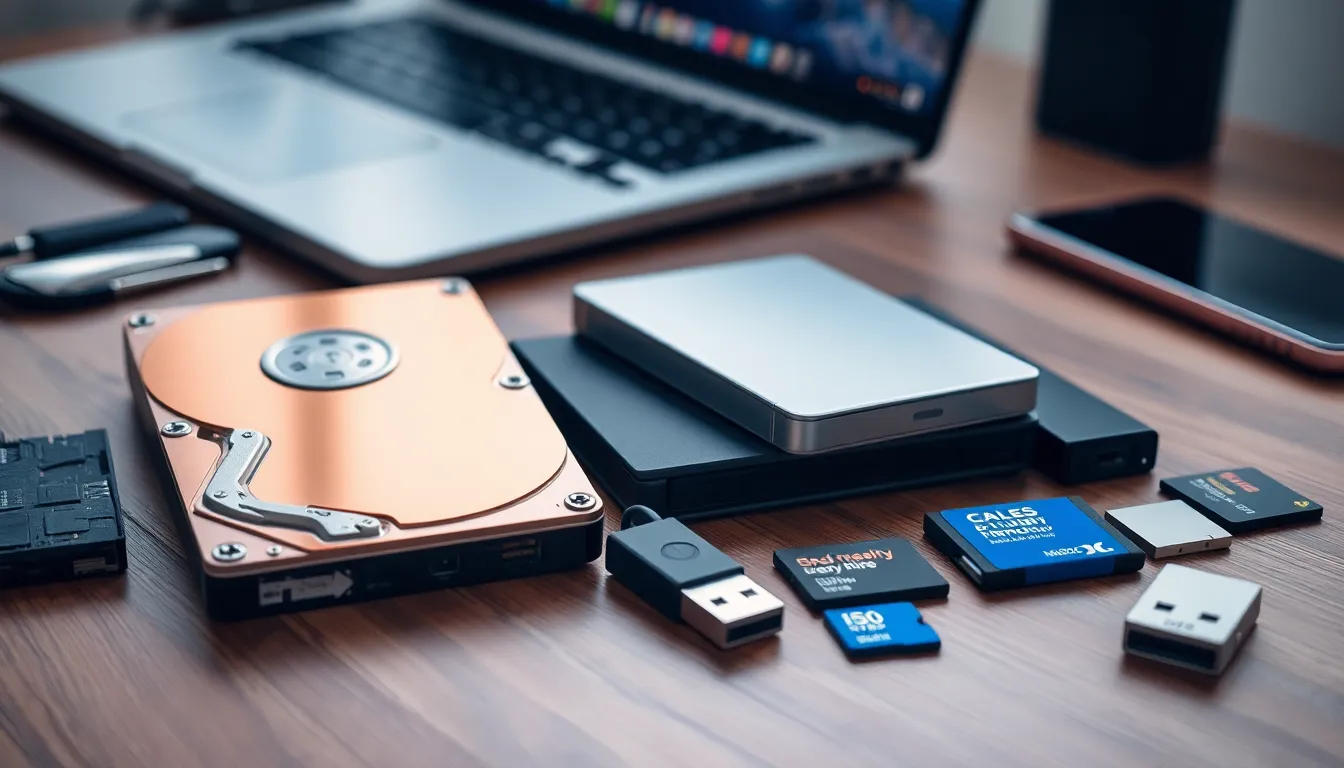
Numerous digital storage devices serve various data storage needs, each offering distinct advantages and functionalities. Understanding their characteristics assists users in selecting appropriate solutions.
Hard Disk Drives (HDD)
Hard Disk Drives (HDDs) consist of magnetic disks that store data and are known for their high capacity and affordability. Typical capacities range from 500 GB to 10 TB. Despite their lower speeds compared to other storage types, HDDs provide adequate performance for everyday tasks and larger file storage. They are ideal for users needing extensive storage solutions at a lower cost, such as for home or office data backups.
Solid State Drives (SSD)
Solid State Drives (SSDs) utilize flash memory to store data, resulting in significantly faster read and write speeds. SSDs generally range in capacity from 120 GB to 8 TB. This speed enables quicker boot times and application loading, making SSDs suitable for gamers and professionals needing high performance. While SSDs typically come at a higher price than HDDs, improvements in technology continue to lower costs, making them increasingly accessible.
USB Flash Drives
USB Flash Drives are compact, portable storage devices suitable for transferring and storing data. Capacities generally range from 4 GB to 2 TB. Users appreciate their ease of use and durability, as they withstand physical damage better than traditional drives. These devices are perfect for carrying files on-the-go and for temporary storage needs, such as file sharing between computers or devices.
Memory Cards
Memory Cards serve as removable storage media, commonly used in cameras, smartphones, and tablets. Popular formats include SD, microSD, and CompactFlash, with capacities ranging from 2 GB to 1 TB. Memory cards provide easy expansion for devices limited in native storage. Their portability allows users to save and transfer large amounts of data effortlessly, making them essential for mobile photography and videography.
Factors to Consider When Choosing Digital Storage Devices
Selecting the right digital storage device involves multiple factors that influence both performance and usability. Capacity, speed, and durability play crucial roles in ensuring the chosen device meets specific storage needs.
Capacity
Capacity defines the amount of data a storage device can hold, measured in gigabytes (GB) or terabytes (TB). Traditional hard drives (HDDs) offer larger capacities, often ranging from 500 GB to 12 TB, making them suitable for extensive data storage. Solid-state drives (SSDs) provide capacities from 120 GB to 8 TB and generally cater to users needing faster access without compromising storage amount. Cloud storage options, often scalable, allow users to choose plans based on their data volume, offering flexibility from a few GB to several TB. For users requiring portable solutions, flash drives typically range from 4 GB to 2 TB, while memory cards for cameras can accommodate between 2 GB and 1 TB.
Speed
Speed significantly impacts data access and transfer rates. SSDs excel in speed, with read/write speeds exceeding 500 MB/s, offering rapid data retrieval for applications and large file transfers. In contrast, HDDs usually deliver slower performance, averaging around 80-160 MB/s, which may affect tasks requiring quick data access. For cloud storage, speed relies on internet connectivity; high-speed connections enable faster uploads and downloads. Users prioritizing speed should consider SSDs or high-performance external drives.
Durability
Durability ensures the longevity and reliability of digital storage devices. SSDs, with no moving parts, withstand shocks and drops better than traditional HDDs, significantly lowering failure risks. HDDs, although affordable, can be susceptible to physical impacts, leading to data loss in nearly 10-20% of cases. Flash drives and memory cards often feature rugged designs for added protection against wear. Cloud storage doesn’t face physical wear but relies on service providers to maintain data integrity, making it necessary to choose reputable providers with solid security measures.
Future of Digital Storage Devices
The future of digital storage devices focuses on innovation and efficiency. Emerging technologies and evolving trends continuously shape how users store and manage data.
Emerging Technologies
Emerging technologies in digital storage include developments like DNA data storage and 3D NAND technology. DNA data storage utilizes synthetic DNA molecules to encode data, offering unprecedented density and durability. Current estimates suggest DNA can store up to 215 petabytes of data in a single gram, making it an attractive option for long-term data archiving.
3D NAND technology enhances flash storage capabilities by stacking memory cells, increasing storage density and performance. Products using 3D NAND often exhibit improved speed and reduced latency. This technology allows SSDs to achieve higher capacities, going well beyond 2 TB while maintaining competitive pricing.
Other innovations involve hybrid storage solutions, combining SSD and HDD technologies for optimal performance and cost. These systems leverage the speed of SSDs for frequently accessed data and HDDs for larger datasets, offering a balanced approach to storage needs.
Trends in Storage Solutions
Trends in storage solutions reveal a shift towards cloud-based services and increased data security. Users increasingly adopt hybrid cloud strategies that combine private and public storage options. This approach provides flexibility, allowing organizations to scale resources according to their needs while maintaining control over sensitive data.
Data security advancements become a priority as cyber threats rise. Encryption technologies and secure access protocols ensure data is protected during storage and transfer. Furthermore, artificial intelligence (AI) enhances storage management, enabling automatic data organization and predictive maintenance.
Sustainability trends also gain traction, prompting manufacturers to develop eco-friendly storage options. Green technologies aim to minimize energy consumption and waste in data centers. Companies actively seek ways to reduce their carbon footprint while meeting growing storage demands.
The convergence of these emerging technologies and trends signals a transformative era for digital storage, focusing on enhancing user experience, efficiency, and data protection.
The landscape of digital storage devices continues to evolve rapidly. As technology advances users must stay informed about the options available to them. Each type of storage device offers distinct advantages catering to different needs from vast data archives to fast access for gaming and professional applications.
Understanding the unique features of HDDs SSDs cloud storage and more allows individuals and businesses to make strategic decisions. Embracing innovations like DNA storage and 3D NAND technology will further enhance data management capabilities.
Ultimately the right choice in digital storage not only optimizes performance but also ensures data security and accessibility for the future.