In a world where speed is king and lag is the villain, performance hardware steps onto the stage like a superhero in spandex. Whether it’s gaming, video editing, or crunching numbers, the right hardware can turn a sluggish machine into a turbocharged powerhouse. Imagine your computer zipping through tasks like it’s on a caffeine high—who wouldn’t want that?
Overview of Performance Hardware
Performance hardware refers to components designed to significantly enhance the speed and efficiency of computing systems. Processors, graphics cards, memory modules, and storage devices play key roles in determining a computer’s performance level. Upgrading to more advanced central processing units (CPUs) can lead to faster processing speeds and improved multitasking capabilities.
Graphics processing units (GPUs) enhance visual rendering, making them essential for gamers and content creators. High-speed solid-state drives (SSDs) provide quicker data retrieval and loading times compared to traditional hard drives, reducing wait times for users. Additionally, an increase in system memory, known as RAM, supports smoother operation during intensive tasks like video editing or complex simulations.
Selecting compatible hardware components ensures optimal performance. For instance, pairing a high-performance GPU with a powerful CPU maximizes gaming or rendering capabilities. Understanding specifications is crucial; for example, higher clock speeds in CPUs usually translate to better performance.
Benchmarking tools offer insights into hardware efficiencies, enabling users to identify bottlenecks in their systems. Regularly monitoring software and driver updates can maintain optimal performance levels. Awareness of thermal management is also important; effective cooling solutions prevent overheating and prolong hardware lifespan.
Performance hardware upgrades provide significant benefits for various applications, whether for gaming, professional media production, or everyday tasks. Investing in high-quality components ultimately leads to a more responsive and powerful computing experience.
Types of Performance Hardware
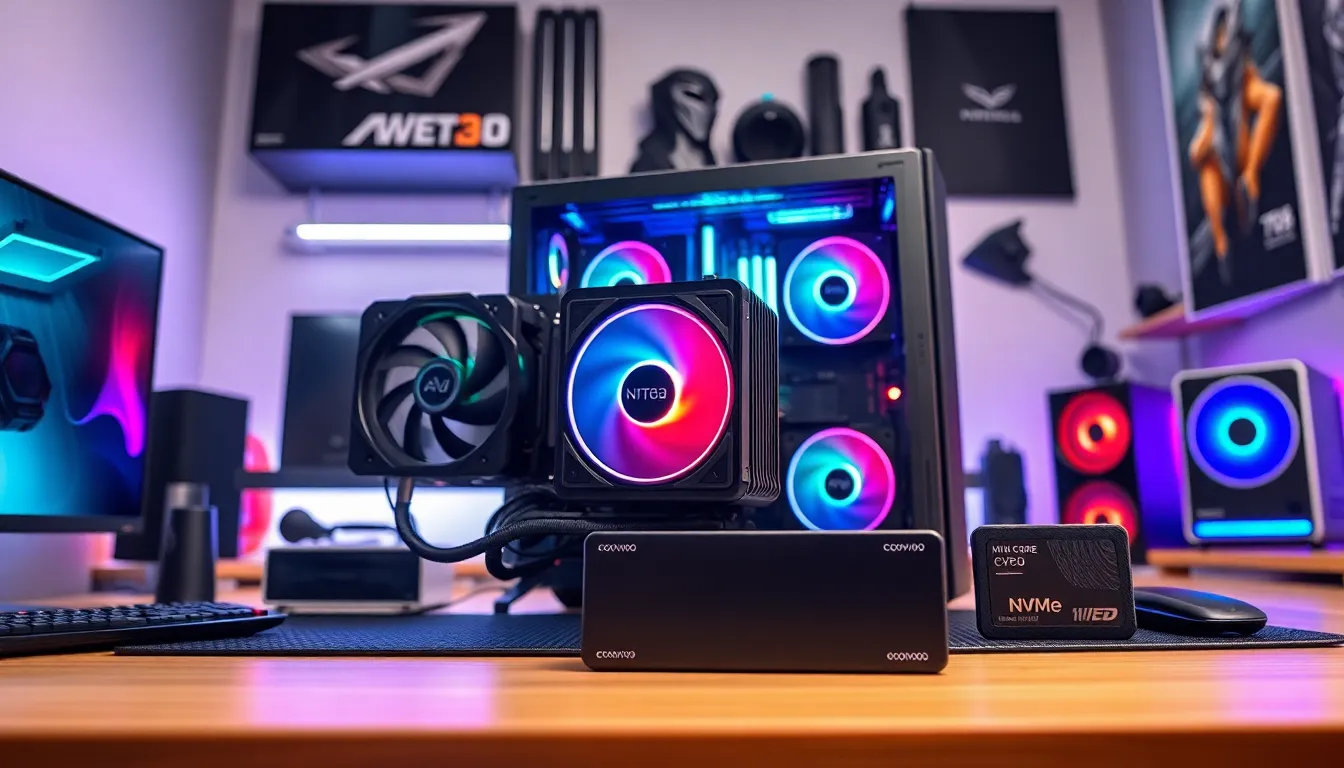
Understanding different types of performance hardware helps in selecting components that enhance computer capabilities. Key elements include graphics cards, CPUs, and SSDs.
Graphics Cards
Graphics cards serve as critical components for smooth visual output. They process images and render graphics quickly, making them essential for gaming and design. Advanced GPUs increase frame rates during intense gameplay, delivering better immersion. Content creators benefit from faster rendering times and high-resolution graphics. Those seeking performance should consider cards like the NVIDIA GeForce RTX series or AMD Radeon RX models. Selecting a GPU that matches the CPU ensures balanced performance.
CPUs
CPUs act as the brain of the computer. They handle all processing tasks and execute instructions efficiently. Newer multi-core processors, like AMD Ryzen and Intel Core series, enable faster multitasking and improve overall responsiveness. Higher clock speeds help perform demanding calculations quicker. When upgrading, pairing a CPU with compatible motherboards maximizes performance potential. Ensuring adequate cooling prevents throttling, which helps maintain optimum performance during resource-intensive tasks.
SSDs
SSDs lead in data storage performance. Unlike traditional hard drives, SSDs utilize flash memory to provide rapid access to files and applications. Users experience significant reductions in boot times, application load times, and file transfers. Options like NVMe SSDs outperform SATA SSDs, offering higher speeds and lower latency. Prioritizing storage upgrades can noticeably enhance overall system performance.
Factors Affecting Performance
Performance hinges on several key factors, including benchmarking and compatibility. Understanding these elements helps optimize hardware for enhanced functionality.
Benchmarking
Benchmarking evaluates system performance through standardized tests. Tools like 3DMark and Cinebench measure processing power and graphical capabilities. Results highlight bottlenecks, guiding hardware upgrades. Next, comparing scores against similar systems reveals how competitive a setup is. Regular benchmarking encourages proactive maintenance, ensuring performance remains optimal over time. Using benchmarks, individuals can identify areas needing enhancement, like CPU or GPU improvements.
Compatibility
Compatibility plays a crucial role in hardware performance. Selecting components that function well together ensures efficient operation. A powerful GPU works best with an equally robust CPU to avoid bottlenecks. Motherboards must support CPU sockets and memory modules for seamless integration. Additionally, choosing RAM with the correct frequency can enhance speed without issues. Other factors like power supply ratings and cooling solutions also affect the overall compatibility of hardware components. Matching these specifications maximizes performance and longevity.
Best Performance Hardware Brands
Choosing the right brand can significantly impact system performance. Below are some of the top brands known for their high-quality performance hardware.
Brand A
NVIDIA consistently leads the graphics card market with its innovative technology. Their GeForce RTX series is renowned for real-time ray tracing, delivering stunning visuals for gamers and content creators. Additionally, NVIDIA’s GPUs perform exceptionally well in computational tasks, making them popular among professionals in AI and data science. Embedded software solutions optimize power efficiency while enhancing gaming experiences. Users often find NVIDIA’s regular driver updates improve performance and compatibility. This brand remains a go-to choice due to its reliability and cutting-edge features.
Brand B
AMD has gained a powerful reputation in the CPU and GPU markets. Their Ryzen processors excel in multi-threaded performance, catering to enthusiasts and professionals alike. Moreover, AMD’s Radeon graphics cards provide strong competition against NVIDIA, offering excellent performance at varying price points. The recent advancements in AMD’s architecture deliver superior efficiency, complementing their hardware lineup. Users appreciate the aggressive pricing strategies, enabling access to high-performance hardware without breaking the bank. As a result, AMD continues to be a formidable player in the performance hardware landscape.
Future Trends in Performance Hardware
Emerging technologies are shaping the future of performance hardware, driving significant advancements. Innovations in artificial intelligence are enhancing CPU and GPU capabilities, allowing for smarter processing and resource management. Various brands now focus on integrating AI features, which optimize performance during demanding tasks.
Quantum computing presents a potential revolution in hardware performance. This new computing paradigm could drastically outperform classical systems by leveraging quantum bits. Many researchers are exploring its feasibility for high-speed computations in fields such as simulation and cryptography.
Increased emphasis on sustainability influences hardware design. Manufacturers are prioritizing energy-efficient components, which reduce power consumption without sacrificing performance. Energy-efficient graphics cards and CPUs not only contribute to lower electricity bills but also support environmentally friendly initiatives.
Growing interest in augmented reality and virtual reality demands more advanced hardware. As immersive experiences become mainstream, performance hardware must evolve to handle complex graphics rendering effectively. This trend drives competition among companies to develop high-performance, cost-effective solutions.
Furthermore, connectivity advancements with technologies like PCIe 5.0 and DDR5 memory promise faster data transfer rates. These technologies enhance the performance of GPUs and CPUs by minimizing latency. High-speed data access supports seamless multitasking and improved system responsiveness.
Lastly, the shift towards modular hardware systems offers customization opportunities. Users can now upgrade specific components without replacing entire systems, promoting longevity and flexibility. This approach allows individuals to tailor their systems to specific tasks, maximizing performance in various applications.
Investing in performance hardware is a game changer for anyone looking to enhance their computing experience. Upgrading key components like CPUs GPUs and SSDs can lead to significant improvements in speed and efficiency. These enhancements are crucial for gamers content creators and professionals who rely on high-performance systems.
As technology continues to evolve the importance of selecting compatible and advanced hardware becomes even more apparent. Keeping up with trends and innovations ensures that users can maximize their system’s potential. By prioritizing performance hardware individuals can transform their machines into powerful tools that meet their demanding needs and exceed expectations.