
In today’s digital jungle, network security hardware is the unsung hero battling cyber threats while we sip our coffee and scroll through cat memes. With hackers lurking like ninjas in the shadows, businesses need robust defenses to keep their data safe. Think of network security hardware as the bouncer at an exclusive club—only the right guests get in, and troublemakers are shown the door.
From firewalls to intrusion detection systems, these gadgets are the frontline warriors protecting sensitive information. Investing in the right hardware not only shields against attacks but also boosts confidence among clients and employees alike. So, let’s dive into the world of network security hardware and discover how these tech titans can help keep your digital fortress standing strong.
Overview of Network Security Hardware
Network security hardware encompasses a variety of devices specifically designed to protect networks from unauthorized access and malicious activities. Firewalls serve as the first line of defense, effectively filtering incoming and outgoing traffic based on predefined rules. Intrusion detection systems monitor network traffic for suspicious activities and alert administrators to potential threats. These systems can identify attacks in real time, allowing for swift responses to mitigate damage.
Another crucial component is the virtual private network (VPN), which encrypts data transmissions and ensures secure connections for remote users. By creating secure tunnels, VPNs protect sensitive information from eavesdropping. Additionally, Unified Threat Management (UTM) devices combine multiple security features in a single platform, simplifying management while enhancing protection.
Antivirus appliances protect against malware and other harmful software, scanning files and monitoring system behavior. Regular updates are vital for these systems to remain effective against emerging threats. Security gateways act as integrated points that provide various security measures such as web filtering and email security, ensuring comprehensive protection against diverse cyber threats.
Incorporating intrusion prevention systems (IPS) enhances security by automatically blocking detected threats. By analyzing traffic patterns, IPS devices can preemptively identify and neutralize potential attacks. Each of these components contributes to a robust network security architecture, essential for maintaining the integrity and confidentiality of sensitive data.
Types of Network Security Hardware
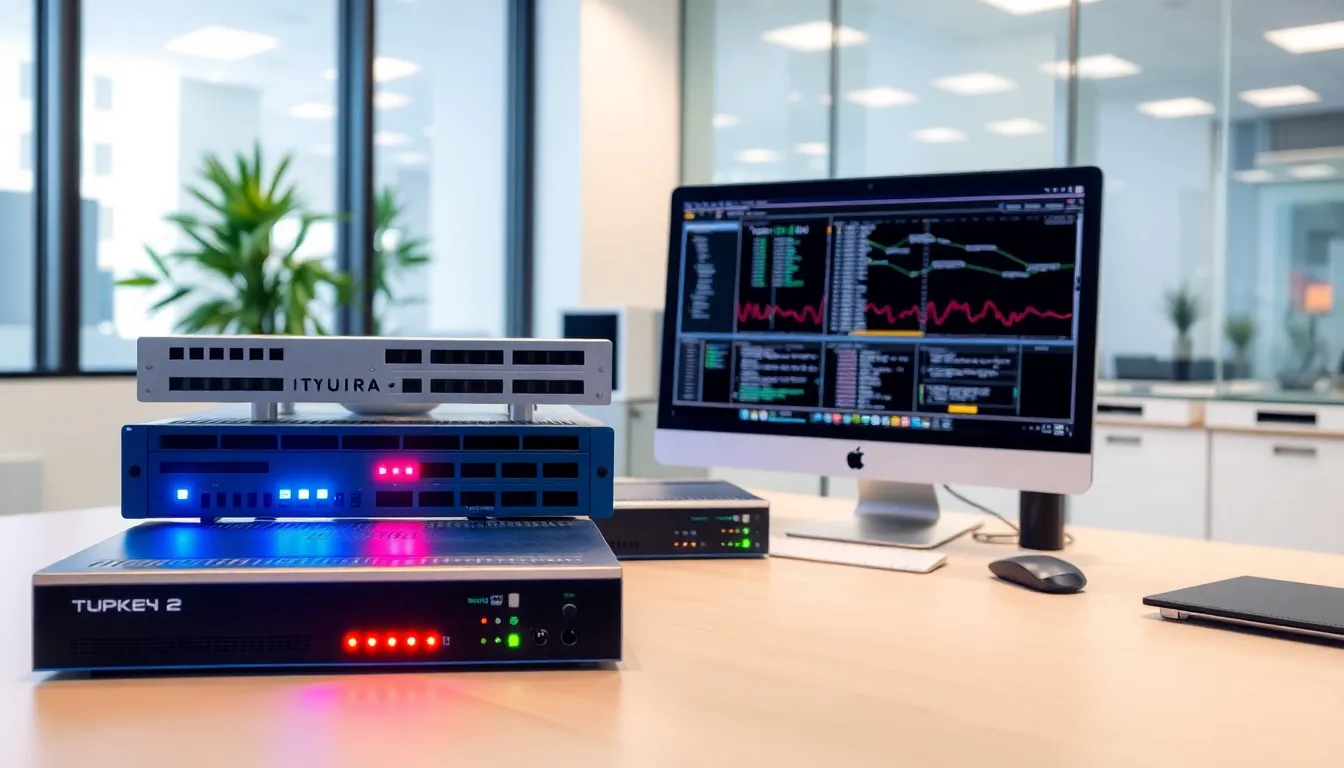
Network security hardware consists of various devices designed to protect networks from cyber threats, ensuring the security and integrity of sensitive information.
Firewalls
Firewalls function as a primary defense mechanism for network security. They filter incoming and outgoing traffic based on predetermined security rules. Companies typically use hardware firewalls to create a barrier between their internal networks and external threats. Packet filtering, stateful inspection, and application-layer filtering are common techniques implemented by firewalls. By regulating traffic flow, firewalls help prevent unauthorized access and combat malware attacks.
Intrusion Detection Systems (IDS)
Intrusion Detection Systems monitor network traffic for suspicious activity or policy violations. IDS solutions can either be host-based or network-based, providing flexibility in deployment according to organizational needs. They gather data and analyze it for signs of intrusions, generating alerts when potential threats are detected. Prompt notifications allow network administrators to respond swiftly to incidents, mitigating possible damage. This proactive approach is essential for maintaining a secure network environment.
Routers with Security Features
Routers equipped with security features enhance overall network security by combining routing capabilities with protective measures. These devices include built-in firewalls and support for Virtual Private Network (VPN) configurations. Organizations benefit from features such as access control lists (ACLs) and Network Address Translation (NAT), which help restrict incoming and outgoing traffic. Built-in security measures make routers a crucial component of any network security strategy, providing an additional layer of protection against external threats.
Benefits of Using Network Security Hardware
Network security hardware offers numerous advantages that enhance the overall protection of digital environments. First, it provides robust defenses against unauthorized access. Firewalls effectively filter traffic, blocking malicious attempts while permitting legitimate users.
Intrusion detection systems contribute by monitoring network activity for suspicious behavior. Alerts generated by these systems enable prompt responses, mitigating potential threats before they escalate.
Additionally, enhanced data integrity results from using specific tools like security gateways. These devices offer comprehensive protection, ensuring information remains secure during transmission and storage. Encryption capabilities, particularly through VPNs, protect sensitive data from interception.
Cost-effectiveness also plays a vital role in adopting network security hardware. Investing in these systems reduces risks of data breaches, which can lead to significant financial losses. Long-term savings from avoiding breaches often outweigh the initial investment in security hardware.
Unified Threat Management (UTM) devices combine multiple security features into a single solution, simplifying management while providing extensive protection. This integration streamlines security practices, allowing organizations to focus on core operations with peace of mind.
Increased trust among clients and employees stems from robust security measures. Businesses fostering a secure environment encourage positive relationships with stakeholders, influencing overall reputation and operational success.
Ultimately, prioritizing network security hardware strengthens the foundation of a secure digital infrastructure, making it an essential investment for businesses of all sizes.
Key Considerations When Selecting Hardware
Selecting the right network security hardware involves multiple critical factors. Compatibility with existing infrastructure ranks high on the list. Ensure devices integrate seamlessly with current network components.
Scalability plays a significant role, especially for growing businesses. Opt for hardware that adapts to increased traffic and user demands over time. This future-proofing ensures sustained performance without frequent upgrades.
Performance specifications should not be overlooked. Assess processing power, throughput capacity, and latency metrics to guarantee efficient handling of data traffic. Faster devices enhance response times and overall network reliability.
Evaluate the ease of management as well. Hardware with intuitive interfaces simplifies configuration and monitoring tasks. User-friendly management tools aid in maintaining robust security protocols.
Cost effectiveness remains a top priority. Investing in high-quality network security hardware can mitigate potential data breach costs. Calculate the long-term savings realized from decreased incidents and recovery expenses.
Vendor reputation significantly influences hardware selection. Opt for proven brands with strong support networks and reliable products. Trustworthy vendors offer extensive documentation and customer service to assist with implementation.
Moreover, consider the warranty and support options available. Extended warranties provide peace of mind, while robust technical support ensures quick resolutions to any issues.
Lastly, stay informed about the latest features and technologies. Innovations such as automated threat detection and machine learning capabilities enhance security measures. Choosing cutting-edge hardware ensures preparedness against evolving cyber threats.
Future Trends in Network Security Hardware
Emerging technologies are shaping the future of network security hardware. Increased reliance on artificial intelligence (AI) and machine learning (ML) provides more effective threat detection and response. AI enhances anomaly detection, allowing systems to identify unusual patterns indicative of security breaches.
Advancements in Internet of Things (IoT) security are becoming crucial. Network security hardware must integrate with numerous IoT devices to ensure comprehensive protection against vulnerabilities. Manufacturers focus on developing hardware capable of supporting the growing number of connected devices.
Zero Trust architecture continues to gain traction. This security model assumes that threats can exist both inside and outside networks, emphasizing the need for continuous verification. Unified Threat Management (UTM) devices are evolving to incorporate Zero Trust principles effectively.
Increased use of cloud-based security solutions presents new opportunities. Security appliances are now designed to manage threats across hybrid environments, combining on-premises and cloud security measures. Real-time data analysis from any location supports agile responses to emerging threats.
Also, the demand for enhanced encryption technologies is rising. Hardware that supports strong encryption protocols safeguards sensitive data against interception during transmission. Innovations in quantum encryption may soon revolutionize data security, providing unmatched protection.
Finally, emphasis on automation in network security hardware streamlines management tasks. Automated updates and patch management can significantly reduce vulnerabilities. As systems become more efficient, organizations can focus on proactive security strategies rather than solely reactive measures.
The future landscape of network security hardware indicates a convergence of advanced technologies, with AI, IoT, Zero Trust, cloud integration, and automation at the forefront. Staying informed about these trends is essential for organizations aiming to secure their digital environments effectively.
Investing in network security hardware is essential for any organization aiming to protect its digital assets. The right tools not only defend against cyber threats but also foster trust among clients and employees. As technology evolves the landscape of network security continues to change. Embracing advancements like AI and cloud-based solutions will be crucial for staying ahead of potential risks. Organizations must prioritize selecting hardware that aligns with their specific needs while considering future scalability. By doing so they can build a resilient network security framework that adapts to emerging challenges.


