In a world increasingly driven by technology, machine-to-machine (M2M) communication stands at the forefront of innovation. This seamless exchange of data between devices is transforming industries, enhancing efficiency, and paving the way for the Internet of Things (IoT). As machines connect and share information autonomously, they create smarter systems that can adapt and respond in real-time.
From smart homes to industrial automation, M2M communication is revolutionizing how devices interact. It eliminates the need for human intervention, allowing for quicker decision-making and improved operational performance. As businesses embrace this technology, understanding its implications becomes crucial for staying competitive in a rapidly evolving landscape.
Overview of Machine-to-Machine Communication
Machine-to-machine (M2M) communication refers to the direct interaction between devices without human intervention. This technology enables devices to share information, control systems, and automate processes across various networks. M2M communication forms the backbone of the Internet of Things (IoT), allowing devices to operate in real-time.
Key components of M2M communication include:
- Devices: Sensors, actuators, and connected equipment participate in data exchange.
- Networks: Wireless and wired networks like cellular, Ethernet, and low-power wide-area networks facilitate communication between devices.
- Protocols: Standard communication protocols, such as MQTT and CoAP, ensure stable and efficient data transfer.
M2M communication significantly impacts industries such as:
- Healthcare: Remote patient monitoring occurs through wearables transmitting health data to providers.
- Transportation: Fleet management systems track vehicle locations and fuel consumption in real-time.
- Manufacturing: Smart factories utilize M2M to monitor machinery performance, predict maintenance needs, and optimize production.
Businesses leveraging M2M communication enjoy increased operational efficiency, reduced costs, and enhanced decision-making capabilities. Furthermore, by enabling automation, M2M fosters innovation and supports new business models, essential for maintaining competitiveness in a rapidly evolving market.
Key Technologies in Machine-to-Machine Communication
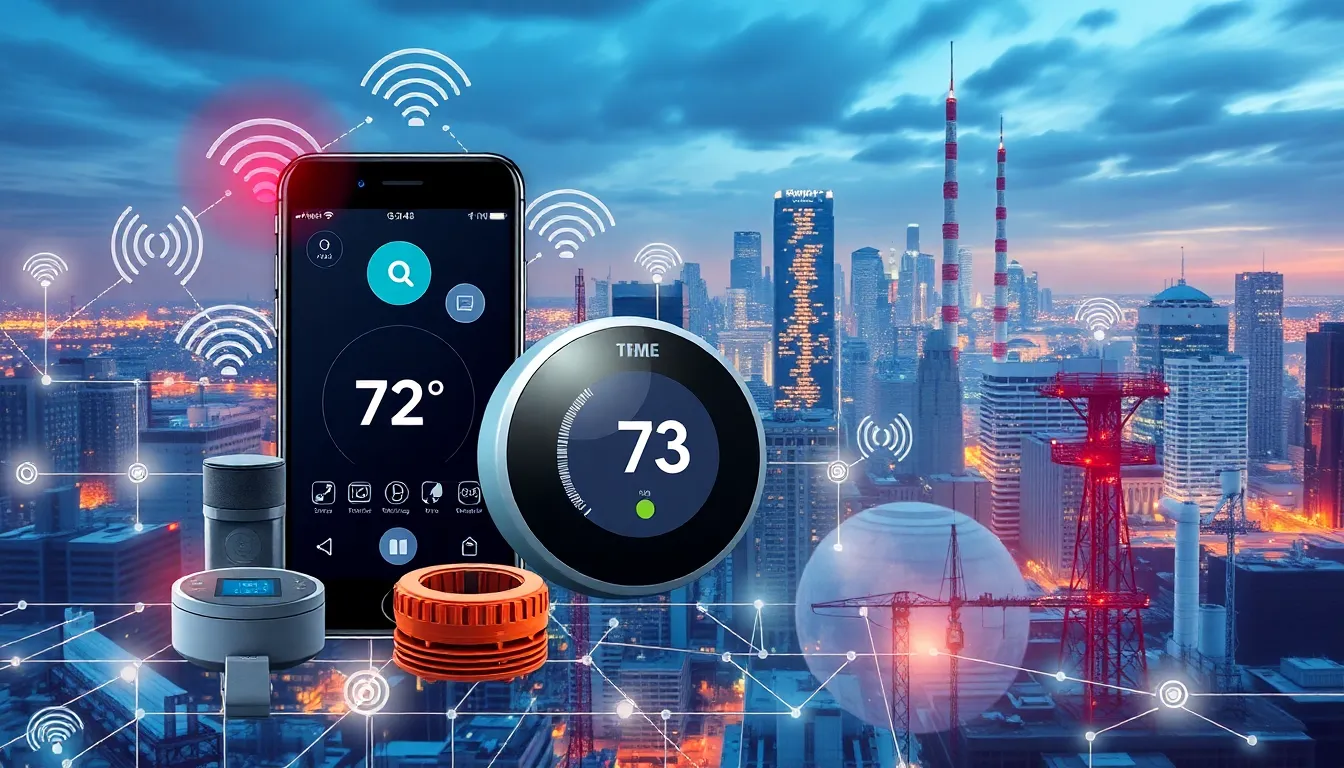
Key technologies drive machine-to-machine (M2M) communication, enabling seamless interactions between connected devices. This section delves into two vital aspects: wireless communication protocols and the integration of IoT and M2M.
Wireless Communication Protocols
Wireless communication protocols provide the framework for devices to exchange data efficiently in M2M communication. Several prominent protocols include:
- MQTT: A lightweight messaging protocol designed for devices with limited computing power. MQTT suits applications requiring low bandwidth and high latency tolerance.
- CoAP: The Constrained Application Protocol optimizes usage in resource-constrained environments. CoAP allows devices to easily communicate over the Internet using a simple request-response model.
- HTTP: The Hypertext Transfer Protocol facilitates data exchange across the web, enabling web-based management of M2M devices.
- Bluetooth Low Energy (BLE): BLE supports low-energy consumption, making it ideal for battery-operated devices in smart home applications.
- Zigbee: Zigbee is a low-data-rate, low-power wireless technology suitable for home automation and industrial control.
These protocols establish reliable connections between devices, enhancing data transfer practices and application performance.
IoT and M2M Integration
The integration of the Internet of Things (IoT) and M2M communication shapes the future of connected technologies. Key benefits of this integration include:
- Scalability: M2M networks easily adapt to growing numbers of devices within IoT ecosystems.
- Interoperability: M2M enables diverse devices to interact, regardless of manufacturer or platform, fostering innovation and collaboration.
- Data Analytics: Combining M2M and IoT allows companies to analyze vast amounts of data for actionable insights, enhancing decision-making processes.
- Remote Monitoring: This integration supports real-time monitoring solutions across various sectors, including agriculture, healthcare, and logistics.
- Enhanced Automation: Automated responses to specific events improve operational efficiency and reduce human error in complex systems.
By integrating IoT and M2M, businesses harness the potential of data-driven solutions to enhance their operations and develop new service offerings.
Applications of Machine-to-Machine Communication
M2M communication plays a crucial role in various sectors, driving innovation and efficiency through automated data exchanges. Key areas benefiting from M2M applications include manufacturing, smart cities, healthcare, and agriculture.
Manufacturing and Automation
M2M communication enhances manufacturing by enabling real-time monitoring and control of production processes. Sensors collect data on equipment performance, sending alerts for maintenance needs. For instance, condition-based maintenance reduces downtime by predicting equipment failures before they occur. Additionally, automated systems streamline supply chain management, adjusting inventory levels based on real-time demand data, which leads to reduced operational costs and increased productivity.
Smart Cities and Infrastructure
Smart cities leverage M2M communication for improved infrastructure management. Connected devices monitor traffic patterns, optimize public transportation routes, and manage energy consumption in real time. For example, smart streetlights adapt brightness based on pedestrian presence, improving safety while conserving energy. Additionally, M2M-enabled waste management systems optimize collection routes, reducing fuel consumption and operational expenses. This integration of technology enhances the quality of life for citizens by fostering sustainability and reducing congestion.
Benefits of Machine-to-Machine Communication
Businesses experience numerous advantages from machine-to-machine (M2M) communication. Enhanced operational efficiency allows for streamlined processes and reduced downtime.
Cost reduction occurs through automation, minimizing the need for manual labor and decreasing error rates.
Real-time data exchange supports informed decision-making. This immediacy leads to faster responses to emerging situations, improving overall business agility.
Increased scalability offers growth as companies adapt to changing demands without overhauling their infrastructure.
Enhanced security measures protect sensitive data, ensuring that communication between devices maintains integrity and confidentiality.
Improved resource management comes from utilizing connected devices to monitor and optimize energy usage, leading to cost savings and sustainability.
M2M communication fosters predictive maintenance, allowing businesses to anticipate equipment failures, thereby reducing unplanned outages and extending the life of machinery.
The development of new business models emerges from M2M technology, enabling companies to offer innovative services that were previously unattainable or financially unfeasible.
Overall, M2M communication drives advancements across industries, improving operational capabilities and supporting competitive advantages in a dynamic market.
Challenges and Considerations
M2M communication faces various challenges that organizations must address to maximize its benefits.
- Security Risks: Cybersecurity threats pose significant risks due to the increasing number of connected devices. Organizations must implement robust security protocols to protect sensitive data transmitted between devices.
- Interoperability Issues: Different vendors may use diverse protocols and standards, leading to compatibility challenges among devices. Ensuring interoperability among various systems is crucial for seamless communication.
- Data Management: The vast amount of data generated by M2M communication requires effective management and analytics strategies. Businesses must invest in data storage solutions and analytical tools to utilize the information effectively.
- Network Reliability: Device communication depends on stable network connections. Any disruption in connectivity can lead to data loss and operational hiccups. Ensuring reliable and redundancy in networks is essential for consistent M2M functionality.
- Scalability Concerns: As organizations grow, M2M solutions must scale accordingly. Businesses need to choose platforms that can accommodate increasing numbers of devices without compromising performance.
- Regulatory Compliance: Compliance with local and international regulations regarding data privacy and protection is crucial. Organizations must stay informed about relevant laws to avoid potential legal issues.
- Cost Implications: While M2M communication can lead to cost savings, initial investments in technology and infrastructure may pose challenges. Organizations must evaluate long-term ROI when implementing M2M solutions.
- Technical Expertise: Knowledgeable staff is essential for deployment and maintenance. Organizations may face a skills gap that hinders effective implementation of M2M communication technologies.
Addressing these challenges allows organizations to optimize M2M communication for enhanced operational efficiency and remain competitive in a rapidly evolving market.
Machine-to-machine communication is reshaping the landscape of technology and business. By enabling devices to interact autonomously, it drives efficiency and innovation across various sectors. Organizations that embrace M2M technology can unlock significant operational improvements and cost savings while enhancing decision-making capabilities.
However, the journey isn’t without challenges. Security risks, interoperability issues, and data management complexities must be addressed to fully leverage M2M’s potential. As businesses navigate these hurdles, the benefits of M2M communication will continue to play a pivotal role in fostering competitive advantages in an increasingly interconnected world.